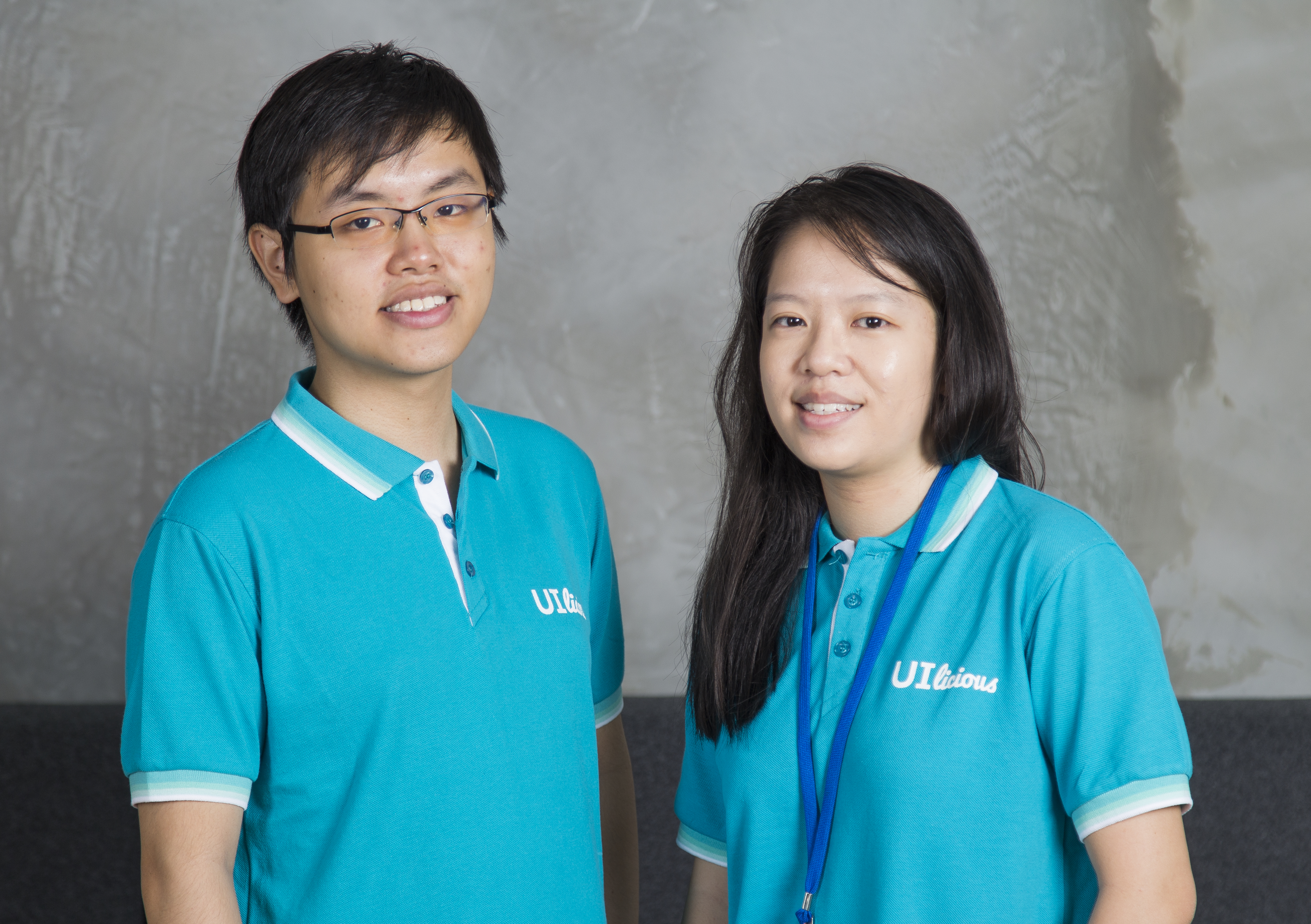
UI-licious’ co-founders, chief technology officer Eugene Cheah (left) and chief executive officer Shi Ling Tai (right)
UI-licious, a Singapore-based startup that simplifies automated user interface testing for web applications, announced today it has raised $1.5 million in pre-Series A funding. The round was led by Monk’s Hill Ventures and will be used to grow UI-licious’ product development and marketing teams.
Founded in 2016 by Shi Ling Tai and Eugene Cheah, UI-licious serves companies of all sizes, and its current clients include Daimler, Jones Lang LaSalle and tech recruitment platform Glints.
Tai, UI-licious’ chief executive officer, said that about 90% of software teams around the world rely on manual testing, which is both time-consuming and expensive. UI-licious enables users to write test scripts in pseudocode, or a language that is similar to plain English and therefore accessible to people with little programming experience.
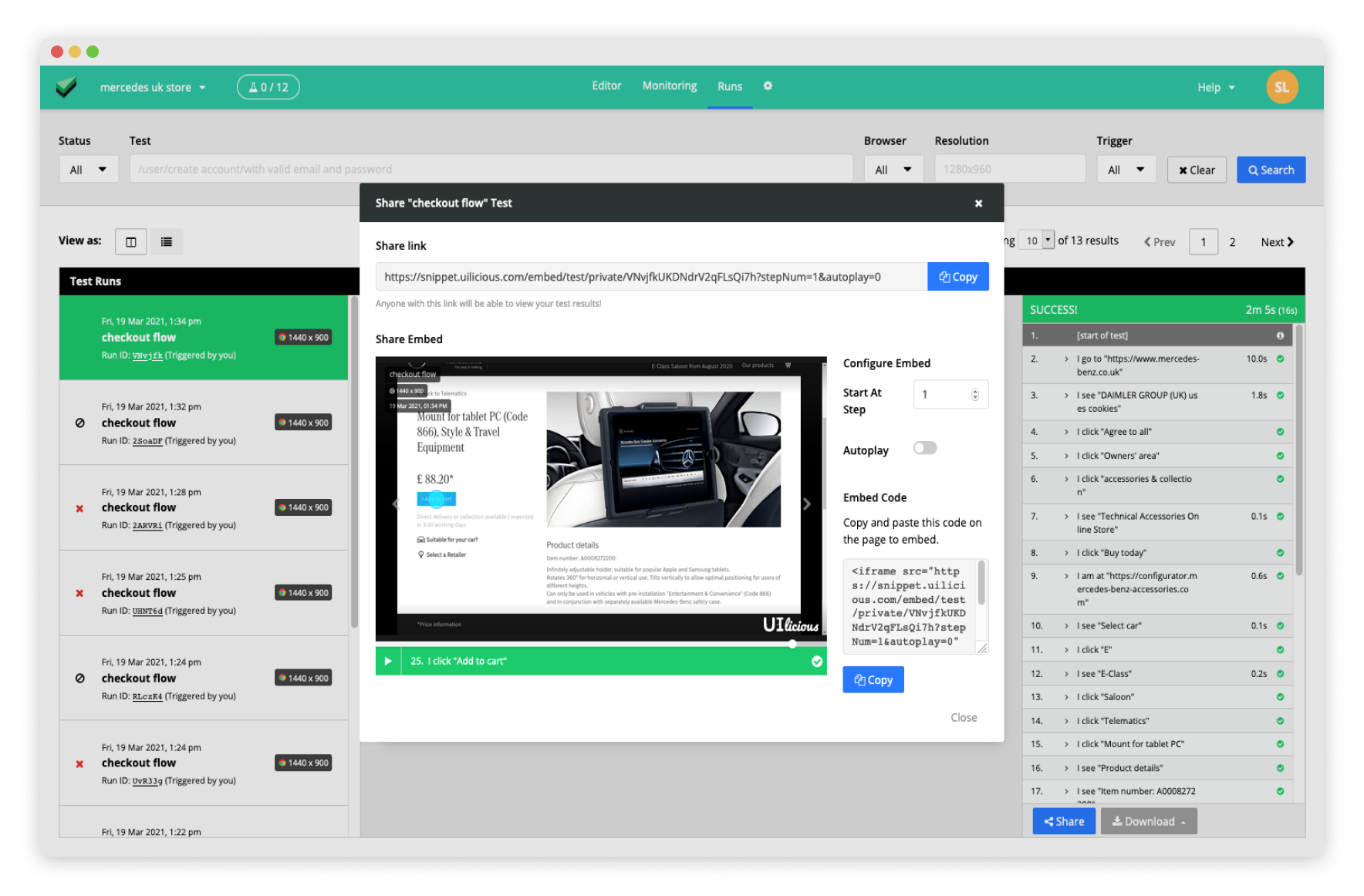
A screenshot of UI-licious’ test reporting feature
Software teams can then schedule how often the tests run. UI-licious’ proprietary smart targeting test engine supports all browsers and allows the same scripts to be run even if there are changes in a web application’s user interface or underlying code. It also produces detailed error reports to reduce the time needed to find and fix a bug.
When asked how UI-licious compares to other automated user interface testing solutions, Tai told TechCrunch, “Coded solutions require a trained engineer to inspect the website’s code to write the test scripts. The problem is that most software testers are not trained programmers, sometimes they may be the marketing or sales team that owns the project. And while there are other no-code solutions that allow non-programmers to record their actions and replay it, such tests tend to become obsolete quickly as the UI changes.”
UI-licious’ selling point is that “it is designed to make it accessible for anyone to automate UI testing and set up error alerts without needing to know how to code,” she added. “UI-licious also reduces the effort to maintain the tests as the UI code changes with its smart targeting test engine.”
In press statement, Monk’s Hill Ventures partner Justin Nguyen said, “Co-founders Shi Ling and Eugene have developed a product to address the quality assurance issues that have plagued the software automation industry for decades,” adding that “the team’s experience as software engineers has equipped them with the technical knowledge and insights to build a simple and robust tool that empowers manual testers to automate testing and detect bugs before users do.”

from Startups – TechCrunch https://ift.tt/31iH3i0
Comments
Post a Comment