
Drone data scanning company Skycatch announces a $25M raise

Skycatch today announced a $25 million raise, led by ADB Ventures and Wavemaker. Founded in 2013, the Bay Area-based company provides centimeter-accurate 3D scanning services, primarily for construction sites and mining operations.

The service has already been rolled out in a number of different locations around the world — with north of 10,000 sites, according to founder and CEO Christian Sanz. The list includes Chile, Colombia, Peru, Brazil, Australia, Canada, the U.S. and Japan. In particular, the company is seeking to work with sites where connectivity is limited.

“The process of generating high-precision, centimeter-accurate data is extremely difficult. It typically is owned by the laser scanning market,” says Sanz. “Drones, in general, out of the box are not able to achieve that. We saw the true value prop for Skycatch is operating in edge environments where there’s no connection to internet. That’s where we saw the most demand, initially. That is typically mining companies, operating in all of these remote regions.”
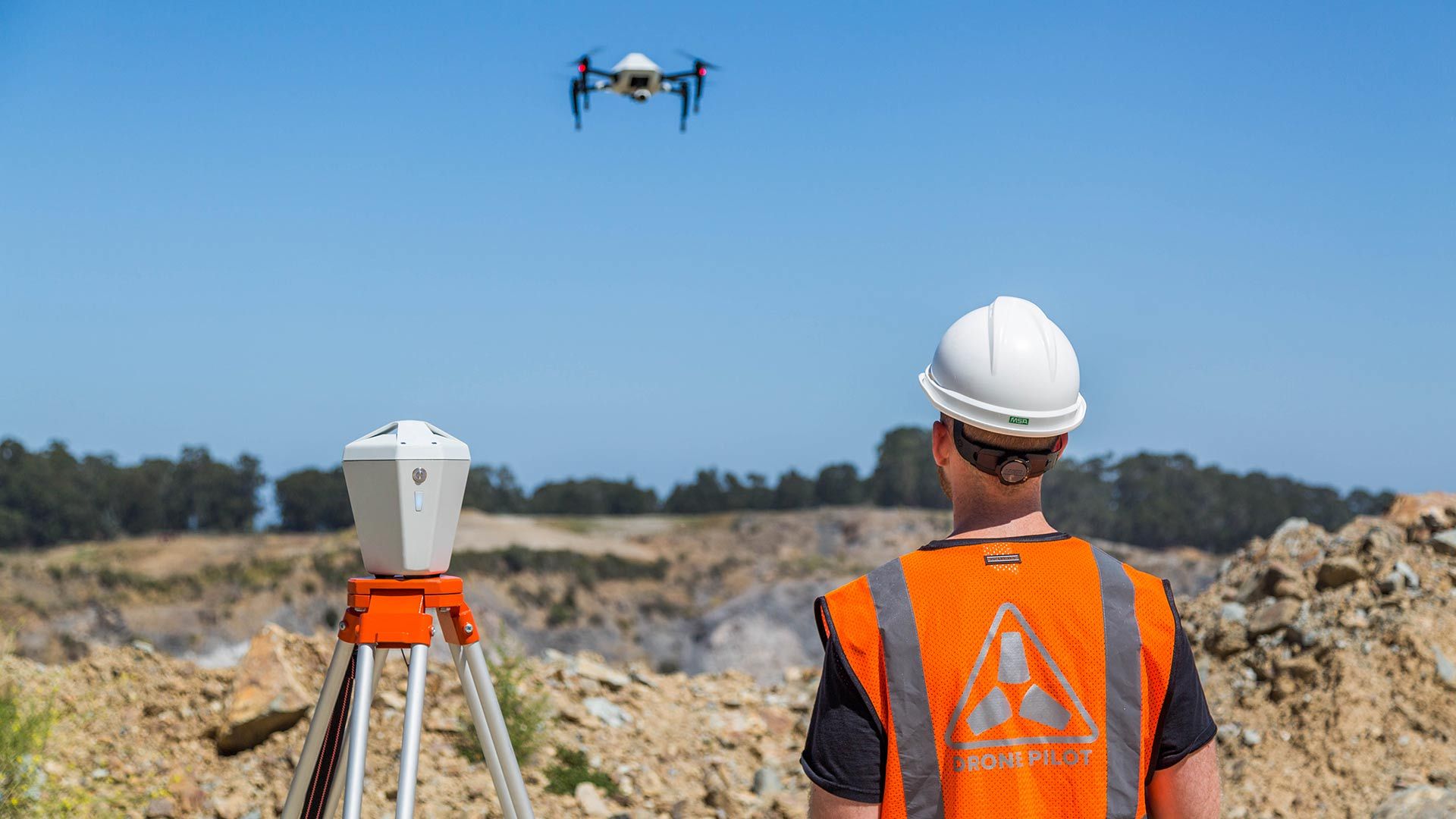
Image Credits:

The company’s technology works with off-the-shelf drones, including ones manufactured by DJI. It provides the 3D mapping software, as well as a base station with an edge processor, known as the Edge 1. Skycatch is also working with off-the-shelf lidar companies to help capture data in more difficult environments, including underground for mining operations.

“Asian Development Bank (ADB) aims to play a catalytic role to enable technology in infrastructure projects, which result in reduced carbon footprints and increased safety and operational efficiency,” ADB’s Daniel Hersson said in a statement provided to TechCrunch. “The enterprise-grade Skycatch technology for capturing, processing and analyzing high accuracy 3D drone data is a critical part to accomplishing that mission.”

The funds will go toward expanding the 50-person company’s sales and marketing team — both of which have been fairly small portions of the company’s overall headcount.


from Startups – TechCrunch https://ift.tt/39cs9y8

Comments

Popular posts from this blog

Axeleo Capital raises $51 million fund

Axeleo Capital has raised a $51 million fund (€45 million). Axeleo first started with an accelerator focused on enterprise startups. The firm is now all grown up with an acceleration program and a full-fledged VC fund. The accelerator is now called Axeleo Scale , while the fund is called Axeleo Capital . And it’s important to mention both parts of the business as they work hand in hand. Axeleo picks up around 10 startups per year and help them reach the Series A stage. If they’re doing well over the 12 to 18 months of the program, Axeleo funds those startups using its VC fund. Limited partners behind the company’s first fund include Bpifrance through the French Tech Accélération program, the Auvergne-Rhône-Alpes region, Vinci Energies, Crédit Agricole, BNP Paribas, Caisse d’Épargne Rhône-Alpes as well as various business angels and family offices. The firm is also partnering with Hi Inov, the holding company of the Dentressangle family. Axeleo will take care of the early stage in...

TikTok’s rivals in India struggle to cash in on its ban

For years, India has served as the largest open battleground for Silicon Valley and Chinese firms searching for their next billion users. With more than 400 million WhatsApp users , India is already the largest market for the Facebook-owned service. The social juggernaut’s big blue app also reaches more than 300 million users in the country. Google is estimated to reach just as many users in India, with YouTube closely rivaling WhatsApp for the most popular smartphone app in the country. Several major giants from China, like Alibaba and Tencent (which a decade ago shut doors for most foreign firms), also count India as their largest overseas market. At its peak, Alibaba’s UC Web gave Google’s Chrome a run for its money. And then there is TikTok, which also identified India as its biggest market outside of China . Though the aggressive arrival of foreign firms in India helped accelerate the growth of the local ecosystem, their capital and expertise also created a level of competit...