Miro is a company in the right place at the right time. The makers of a digital whiteboard are seeing usage surge right now as businesses move from the workplace and physical whiteboards. Today, the company announced a hefty $50 million Series B.
Iconiq Capital led the round with help from Accel and a slew of individual investors. Today’s investment brings the total raised to around $75 million, according to the company. Among the company’s angel investors was basketball star Steph Curry.
What’s attracting this level of investment is that this is a product made for a moment when workers are forced to stay home. One of the primary complaints about working at home is the inability to sit in the same room with colleagues and brainstorm around a whiteboard. This reproduces that to an extent.
What’s more, Miro isn’t simply light-weight add-in like you might find built into a collaboration tool like Zoom or Microsoft Teams; it’s more of a platform play designed to integrate with many different enterprise tools, much like Slack does for communications.
Miro co-founder and CEO Andrey Khusid said the company planned the platform idea from its earliest days. “The concept from day one was building something for real-time collaboration and the platform thing is very important because we expect that people will build on top of our product,” Khusid told TechCrunch.
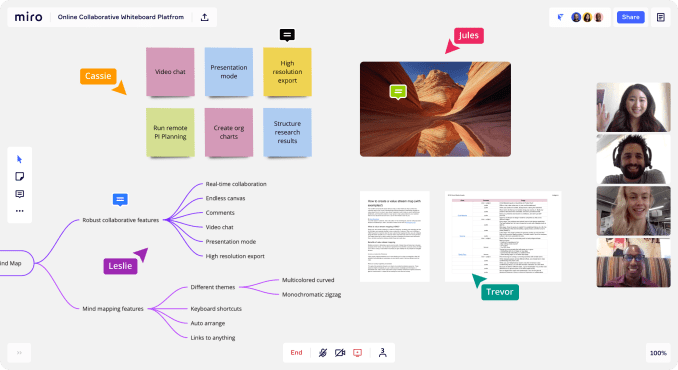
Image Credit: Miro
That means that people can build integrations to other common tools and customize the base tool to meet the needs of an individual team or organization. It’s an approach that seems to be working as the company reports it’s profitable with more than 21,000 customers including 80% of the Fortune 100. Customers include Netflix, Salesforce, PwC, Spotify, Expedia and Deloitte.
Khusid says usage has been skyrocketing among both business and educational customers as the pandemic has forced millions of people to work at home. He says that has been a challenge for his engineering team to keep up with the demand, but one that the company has been able to meet to this point.
The startup just passed the 300 employee mark this week, and it will continue to hire with this new influx of money. Khusid expects to have another 150 employees before the end of the year to keep up with increasing demand for the product.
“We understand that we need to come out strong from this situation. The company is growing much faster than we expected, so we need to have a very strong team to maintain the growth at the same pace after the crisis ends.”

from Startups – TechCrunch https://ift.tt/2KuOHNT
Comments
Post a Comment