After launching its first bottle in 2018, LARQ has drummed up a good deal of interest among consumers looking for ways to wean themselves off of plastic bottles. Last year alone, the Bay Area-based startup managed to sell 75,000 bottles, with help from retail partners like Nordstrom and Bloomingdale’s. The feat is made more impressive by the fact that — at $99 — the company’s offerings are pretty steep as far as refillable water bottles go.
LARQ’s value proposition is in its UV cap. As someone who’s carried around a lot of reusable water bottles since those heady Nalgene days in college, I’ve got some pretty good horror stories about the veritable forest of fungus that’s grown inside. Diligent washing can be particularly difficult with such a narrow receptacle.
The company’s products have also garnered investment interest. Today the company announced a $10 million Series A lead by Seventure, with participation from DCM. The round follows an initial seed fund raised back in June of last year. LARQ’s also got a number of key shareholders, including Capricorn Investment Group, Heuristic Capital, IdeaFarm Ventures, Augment Ventures and Warriors power forward Draymond Green. The Series A bring the company’s funding to date up to $15.7 million.
“At LARQ, we are ushering in a new era of hydration that is better for you and better for the planet,” CEO Justin Wang said in a statement offered to TechCrunch. “We use consumer-centric product design combined with cutting edge technology to make it easier to opt for the healthier and more sustainable choice anywhere and anytime. To realize this vision, LARQ needs to meet the consumer at every opportunity for hydration, from a bottle on-the-go, to the home tap, and everything in between.”
The LARQ bottle in currently being stocked by 88 retailers in 16 countries, though this round is set to help it take that global expansion even further. Early this month, it aimed at bringing its water purifying technology to a Brita-style filter. As of this writing, the campaign has raised more than 13x its $50,000 goal. It was certainly the right product for the company at the moment, as the home market has become increasingly important with fewer people leaving the house.
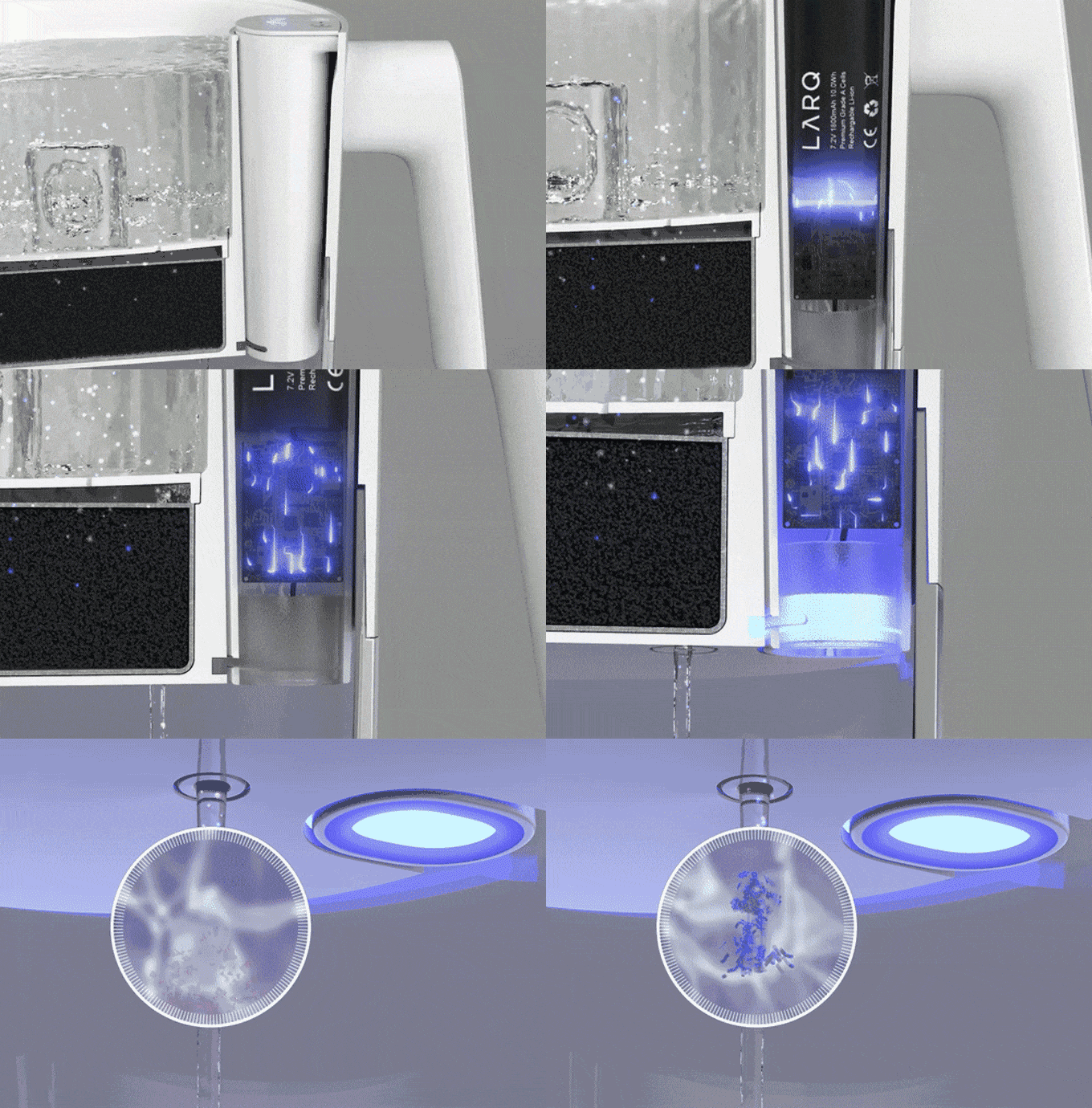
Image Credits: LARQ
LARQ says its technology was in development for 10 years prior to launch. It will be interesting to see how the company continues to evolve as lower-cost takes on the format continue to enter the market.

from Startups – TechCrunch https://ift.tt/2SaSyDU
Comments
Post a Comment