A few weeks after teasing its new product, French startup Klaxoon is launching Board, a visual interface that lets you work together during a video call. Instead of staring at other people’s faces, you get a shared canvas that you can use for presentations and to suggest ideas.
Klaxoon is well aware that many companies have strong opinions about video conferencing services. Some companies are already using Microsoft Teams for everything, others are using Zoom or Google Meet. That’s why the company is trying to make it as easy as possible to use Board while you’re on a call using Zoom, Microsoft Teams or Google Meet.
Given that you’re already in Board when you’re generating a Zoom link, you can also use Klaxoon’s own video-conferencing service called Live.
“Video represents less than 10% of your screen real estate. Our goal isn’t to compete with other services when it comes to pixels, high definition or the number of thumbnails,” Klaxoon co-founder and CEO Matthieu Beucher told me.
Instead, when you use Live, you accept multiple constraints that could help you remain focused on your meeting. For instance, you can only have 15 people in your meeting. The person organizing the meeting can set a limit — it can be 5 minutes, 15 minutes or 30 minutes. But you can’t use Live for a meeting that lasts longer than 30 minutes.
And finally, other people on the calls are represented through tiny thumbnails on the right side of the screen. Most of the screen is filled with a sort of digital whiteboard that you can use to write text, insert images or videos. You can work on your board before starting the meeting or you can add a table from a template library.
People joining your meeting can submit ideas through digital sticky notes. You can also switch from the freeform view to a more structured column view to move ideas from one category to another.
Klaxoon has been working on interactive whiteboards and meeting tools for quite a few years now. Board combines some of the stuff that the company is already providing to its clients, but with a focus on remote meetings. The service is launching today for €9.90 per month.
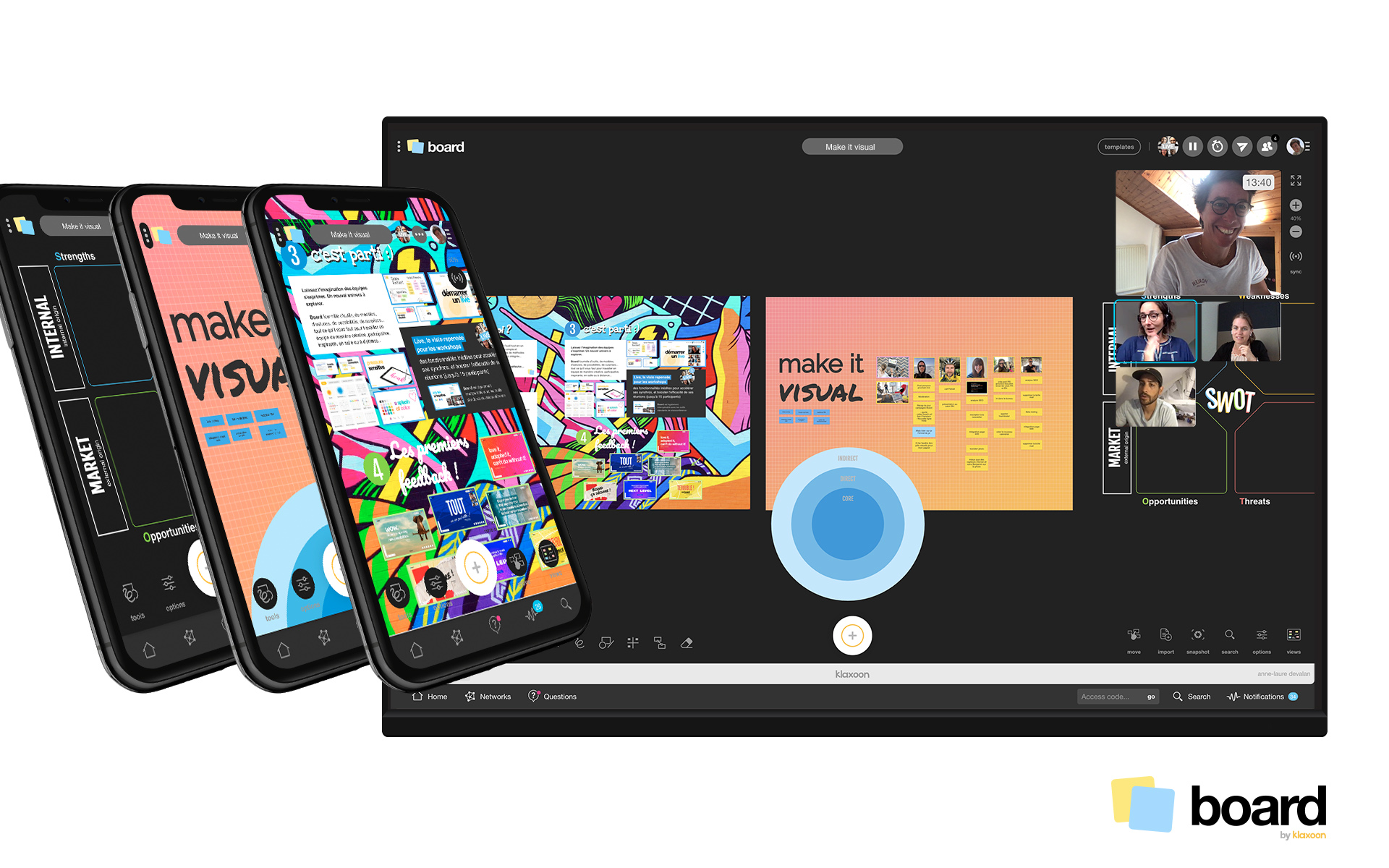
Image Credits: Klaxoon

from Startups – TechCrunch https://ift.tt/336Er8P
Comments
Post a Comment