
You need a minimum viable company, not a minimum viable product

Hi, I’m Ann.

I was one of the first investors in Lyft, Refinery29 and Xamarin. I’ve been on the Midas List for the past three years and was recently named on The New York Times’ list of The Top 20 Venture Capitalists. In 2008, I co-founded Floodgate, one of the first seed-stage VC funds in Silicon Valley. Unlike most funds, we invest exclusively in seed, making us experts in finding product-market fit and building a minimum viable company. Seed is fundamentally different from later stages, so we’ve made it more than a specialty: It’s all we do. Each of our partners sees thousands of companies every year before electing to invest in only the top three or four.

For the past 11 years, I’ve invested at the inception phase of startups. We’ve seen startups go wildly right (Lyft, Refinery29, Twitch, Xamarin) and wildly wrong. When I reflect on the failures, the root cause inevitably stems from misconceptions around the nature of product-market fit.

The magic of product-market fit
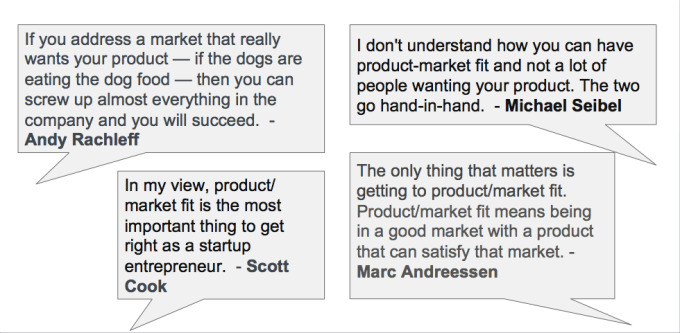
Most successful entrepreneurs and VCs agree that product-market fit is the defining quality of an early-stage startup. Getting to product-market fit allows you to succeed even if you aren’t optimized on other fronts.

Most entrepreneurs conceptualize product-market fit as the point where some subset of customers love their product’s features. At Floodgate, we forensically analyzed companies that died and concluded this conceptualization is wrong. Many failing companies had features that customers loved. Some of these companies even had multiple beloved features! We discovered that having customers love the product is merely a part of product-market fit, not the entire thing. This raises the question: What were they lacking?


from Startups – TechCrunch https://ift.tt/2u8gDmi

Comments

Popular posts from this blog

Axeleo Capital raises $51 million fund

Axeleo Capital has raised a $51 million fund (€45 million). Axeleo first started with an accelerator focused on enterprise startups. The firm is now all grown up with an acceleration program and a full-fledged VC fund. The accelerator is now called Axeleo Scale , while the fund is called Axeleo Capital . And it’s important to mention both parts of the business as they work hand in hand. Axeleo picks up around 10 startups per year and help them reach the Series A stage. If they’re doing well over the 12 to 18 months of the program, Axeleo funds those startups using its VC fund. Limited partners behind the company’s first fund include Bpifrance through the French Tech Accélération program, the Auvergne-Rhône-Alpes region, Vinci Energies, Crédit Agricole, BNP Paribas, Caisse d’Épargne Rhône-Alpes as well as various business angels and family offices. The firm is also partnering with Hi Inov, the holding company of the Dentressangle family. Axeleo will take care of the early stage in...

TikTok’s rivals in India struggle to cash in on its ban

For years, India has served as the largest open battleground for Silicon Valley and Chinese firms searching for their next billion users. With more than 400 million WhatsApp users , India is already the largest market for the Facebook-owned service. The social juggernaut’s big blue app also reaches more than 300 million users in the country. Google is estimated to reach just as many users in India, with YouTube closely rivaling WhatsApp for the most popular smartphone app in the country. Several major giants from China, like Alibaba and Tencent (which a decade ago shut doors for most foreign firms), also count India as their largest overseas market. At its peak, Alibaba’s UC Web gave Google’s Chrome a run for its money. And then there is TikTok, which also identified India as its biggest market outside of China . Though the aggressive arrival of foreign firms in India helped accelerate the growth of the local ecosystem, their capital and expertise also created a level of competit...