The Bouqs plans to take a slice of Japan’s $6 billion flower market this year with a $30 million strategic growth round from Japanese enterprise business investor Yamasa. While The Bouqs still must compete with bigger contenders like 1-800-Flowers and FTD in the U.S., it will now have to take on incumbents like Ayoma Flower Market and FloraJapan, both of which also offer same-day delivery throughout the land of the rising sun.
So why Japan? According to The Bouqs founder and CEO John Tabis, his company had been looking to expand internationally for awhile and Japan seemed to fit well within that plan.
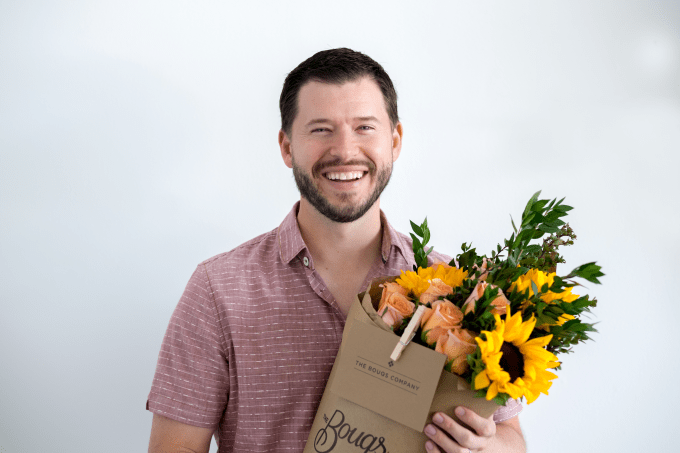
The Bouqs CEO and founder John Tabis
And as far as bigger competition in any country, Tabis is undeterred, telling TechCrunch there’s plenty of opportunities in the flower delivery business if you know where to look. “There’ve been four or five other startups that tried something similar — some of them no longer exist,” Tabis said. “But the thing that’s worked for us, the first is the way that we’ve sourced is unique and it’s really the foundation of our brand.”
The Bouqs sprung up in a wave of Silicon Valley funded flower delivery startups like BloomThat, Farm Girl and Urban Stems, all promising Pinterest-worthy bouquets at the click of a button. But what set it apart was its farm-direct supply chain, cutting out costs from middlemen and delivering flowers that last longer.
This particular round now puts The Bouqs up top as far as total funding raised among its flower delivery startup peers, bringing in $74 million in total funding to date, with competitor Urban Stems at a close second with $27 million in funding, according to Crunchbase.
Tabis also tells TechCrunch the new funds will also further the company’s development into brick-and-mortar stores and that it’s jumping into the wedding biz. As anyone who’s ever planned a wedding will tell you, it’s an industry ripe for disruption — with brides and grooms spending about 8% of the budget on the flowers alone.
One other renewed focus for the company will be its subscription business, keeping customers set up with a fresh bunch of flowers once the old bouquet is ready for tossing. “It’s sort of the linchpin of our business that’s grown very nicely…expanding both our revenue and profitability,” Tabis told TechCrunch.
The SVP of Yamasa, Norikazu Sano, also mentioned further expansion into Asia for the company in a company press release, so we could see The Bouqs in more international areas over time, if all goes right in Japan.
“This financing will enable us to fully realize our vision to create a global network of top-quality farms paired with a category-defining local floral brand enabled by proprietary supply chain technology and vertically integrated sourcing capabilities. We’re so excited for this next phase of the business, and all of the opportunities that lie ahead,” Tabis said.

from Startups – TechCrunch https://ift.tt/2GB54qj
Comments
Post a Comment