Startup Join wants to modernize the back office for an industry that’s everywhere, but maybe not top of mind, especially when it comes to project management software: Commercial construction. The company has raised a $4 million seed round, co-led by Signalfire and Building Ventures and including participation by existing investor Bolt.
The startup’s core product is a collaborative decision-making platform designed to facilitate more effective working relationships between everyone involved in the preconstruction phase of a building project, including owners, contractors, designers, tradespeople and suppliers. The platform includes visualization tool, including timeline and budget planners, along with trend predictions so that you can see how changes to the plan will affect the project overall.
It also includes permission-based account access control, so that you can ensure everyone working on the project has the visibility they need to the pieces they touch. Join’s product also provides insights based on past project performance so that future ones can benefit from the successes of the past.
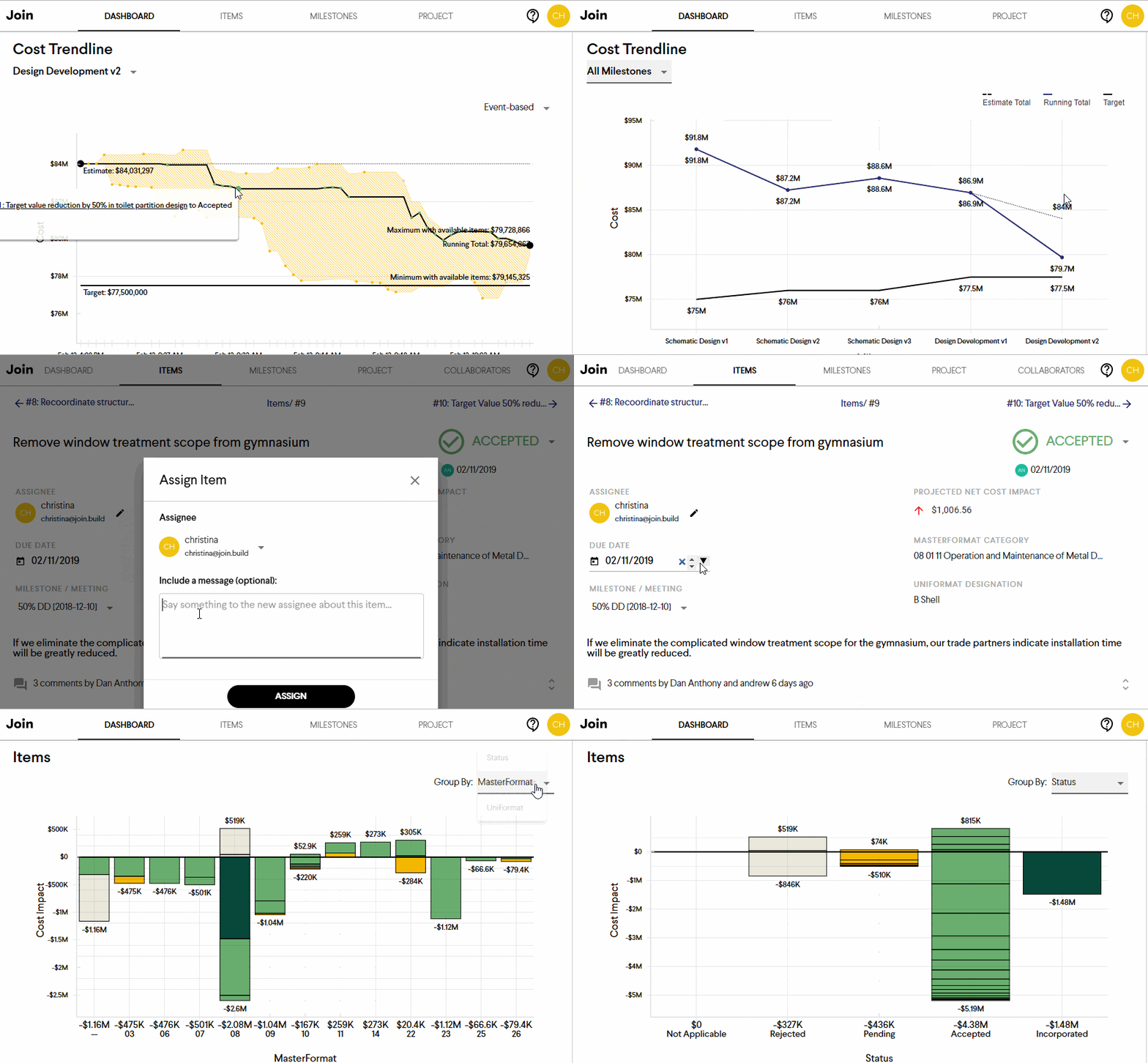
Join’s foundation is based on the observation that commercial construction industry is following a path blazed by the software industry before it, from a so-called ‘waterfall’ product development mode, whereby you more or less follow rigid steps in sequence, to a more agile mode in which each phase is more fluid and the project’s scope can change in the execution. Join believes construction is following a similar path, hence the need now for a tool like this.
The founding team behind Join includes co-founder and CEO Andrew Zukoski, Drew Wolpert, Ye Wang and Jim Forester. Both Zukoski and Wolpert have experience at Flux.io, a startup borne of Google X, that focused on supporting architecture, engineering and construction industry improvement via cloud-based solutions, and Wang has a background in manufacturing design technology from past work at both Onshape and Autodesk.
Join will make use of this round, which brings its total funding to $5.2 million including a pre-seed round led by Bolt, to bring on additional product development talent to help it set up for public launch of the platform to customers.

from Startups – TechCrunch https://tcrn.ch/2Rx4kHx
Comments
Post a Comment