Canopy, an upscale, profitable developer of co-working spaces, has expanded its footprint in San Francisco to a third location on the heels of a strategic financing round.
Co-founded by the product designer Yves Behar, the second-generation design-build developer Amir Mortazavi and serial entrepreneur and medical office space developer Steve Mohebi, Canopy bills itself as a better-designed WeWork for high-powered adults (or aspiring high-powered adults).
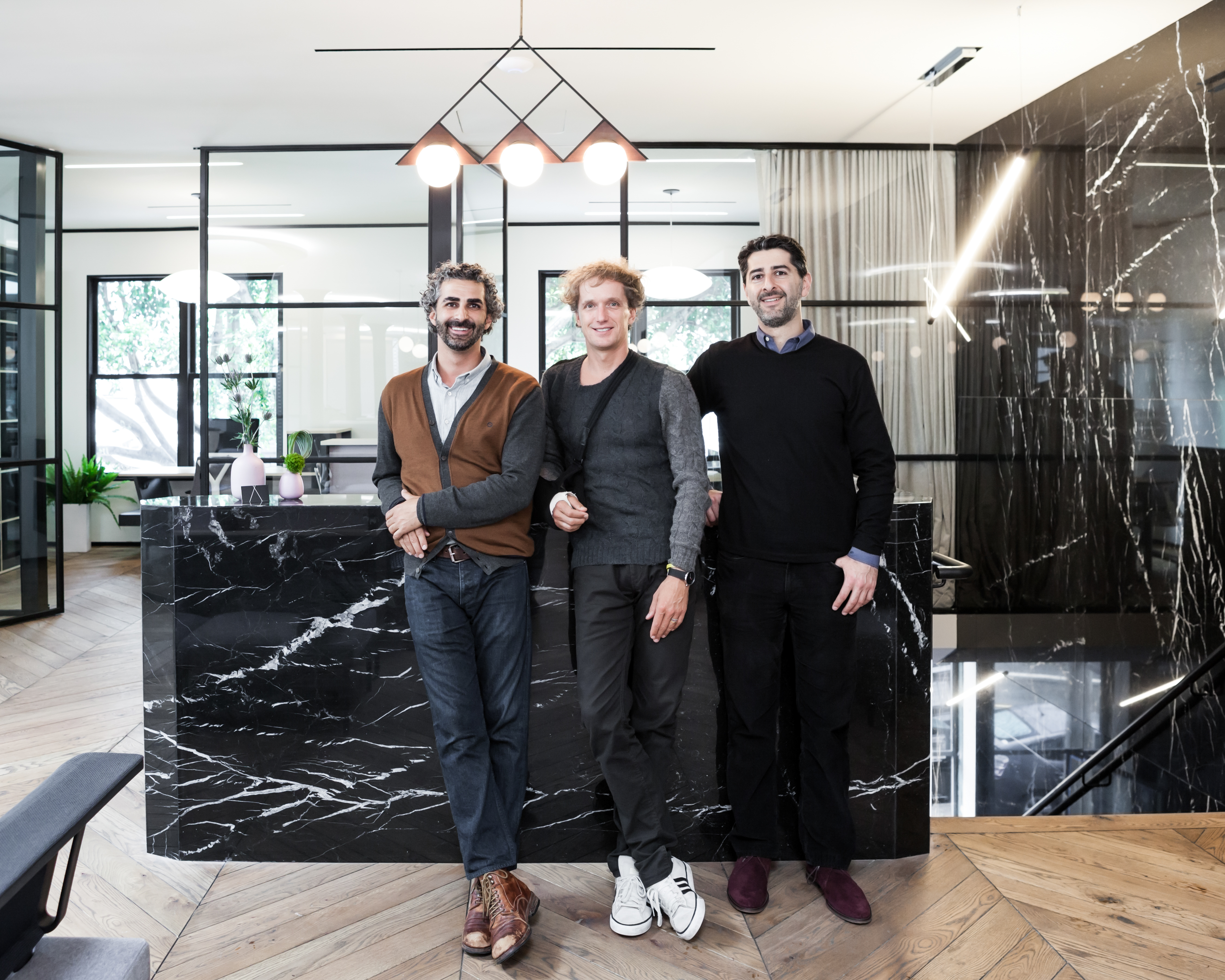
Canopy co-founders Amir Mortazavi, Yves Behar and Steve Mohebi
The company opened its latest office space in the financial district of San Francisco and has plans to double its Jackson Square location with a new penthouse space.
Investors in the round were culled from Canopy members and a few institutional investment funds, including Structure Capital, Montage Ventures and Graph Ventures, and individuals like Erik Blachford, the former chief executive of Expedia, Mark Pincus, the former chief executive of Zynga and Spencer Rascoff, the co-founder of Zillow.
Canopy’s latest office will be at 353 Kearny Street and Pine. The ground floor will house a retail store in partnership with Monocle Magazine and contain 32 offices suitable for everyone from one person shops to larger teams of 10.
Like all of its offices, Canopy’s new building will be kitted out with Herman Miller sit-to-stand desks and Sayl chairs, and sound masking for privacy.
“Designing our spaces along with my friend and co-founder, Yves Behar, to serve the unmet demands of the premium segment has been a true labor of passion,” said co-founder and CEO, Amir Mortazavi, in a statement. “We build everything around our members’ needs — a generosity of space, abundant natural light, easy flow between private and shared spaces — to ensure the overall Canopy experience is at once inspiring and calm.”
The company boasts 300 members already and its founders say the business is already profitable. Canopy’s workspaces are not for everyone. Prices start at $100 per month to take advantage of the company’s addresses for people who want a virtual office. For folks who want 10 days’ worth of access to the co-working space’s common areas and an actual seat at a table, the price tag is $365 per month ($275 gets you 60 days of access out of a year).
Meanwhile, anyone who wants to be able to sit at an actual desk and work at a Canopy space better be willing to shell out $925 per month. That’s… not cheap.

from Startups – TechCrunch https://tcrn.ch/2K0PqaA
Comments
Post a Comment