Forget the office ping pong table, Cherry, a startup in Y Combinator’s latest batch, wants to let employees take company perks into their own hands.
Cherry co-founders (and sisters) Gillian and Emily O’Brien say their Slackbot marketplace will let employees completely personalize the lifestyle benefits they get from their company, allowing them to set up a Spotify Premium account or buy a subscription to Classpass instead of just taking what perks their company dishes out at face value.
Companies will pay huge amounts of money to deliver sweeping employee memberships or build a company gym even if there are only a few people interested in using them. Cherry could potentially eliminate a lot of wasted efforts while still managing to potential recruits. The available subscriptions run the gamut from things like Classpass, Netflix, Spotify, Peloton, Postmates and other services that allow employees to feel like they’re getting.
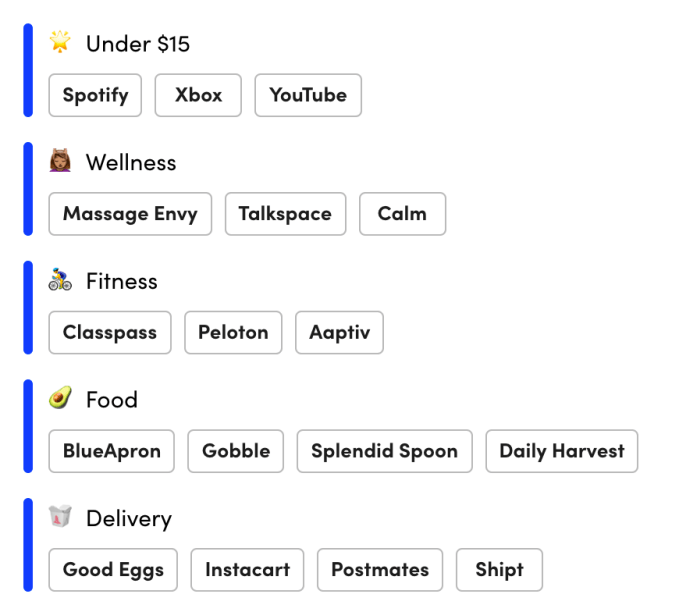
A sampling of Cherry’s 40+ available services.
“There’s money that [companies] are wasting that they could save by just giving everyone this budget and letting them choose for themselves,” CEO Gillian O’Brien told TechCrunch. “We also feel [our service] really stands out on an offer — it could be a big differentiator in terms of hiring or just having that on a company’s careers page.”
Users set up their own subscription accounts; Cherry handles paying for employee perks via gift codes and lets them make changes to their cyber-benefits whenever they’d like.
Cherry is charging startups $149 per month to manage the first 10 employees with $15 per person. You can designate as little as $15 per month per employee, but given that it costs that much per employee to even use the service, it’s more likely that customers will be throwing down a bit more.
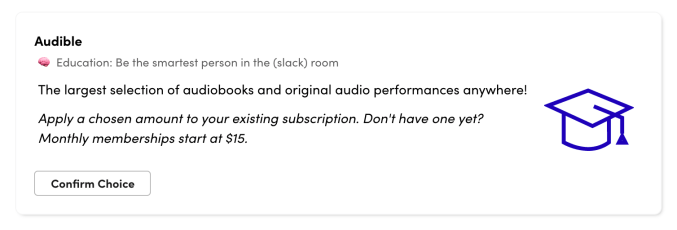
For now, all of this takes place in Slack via a Cherry chatbot, you can pick from available options by tapping buttons; it’s all pretty lightweight and simple.
The service seems like something that would be especially attractive to remote teams, giving employees who aren’t able to stop in for a free lunch or get a monthly massage the ability to treat themselves on company dime. This also enables smaller startups to just throw money at an attractive employee perks solution without having to add more responsibilities to someone’s job.
Cherry’s platform is live now, you can sign-up and check things out on their website.

from Startups – TechCrunch https://ift.tt/2ElneLa
Comments
Post a Comment