The murder of George Floyd last May ignited many things in the United States last year — one of which that was perhaps unexpected: a rise in the number of digital banks targeting the Black community.
Some members of the Black community took their belief that big banks are not meeting their needs and turned them into startup concepts.
One of those startups, First Boulevard (formerly called Theme), has just raised $5 million in seed funding from Barclays, Anthemis and a group of angel investors such as actress Gabrielle Union, Union Square Ventures John Buttrick and AutoZone CFO Jamere Jackson.
For co-founder and CEO Donald Hawkins, the genesis for the Overland, Kansas-bank came after Floyd’s murder, when he and friend Asya Bradley were talking about what they felt Black America “really needed to get out of a vicious cycle” of dealing with the same issues with no real solutions in sight.
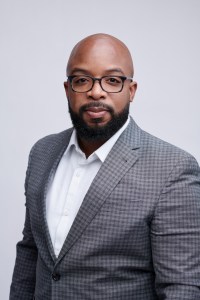
CEO Donald Hawkins
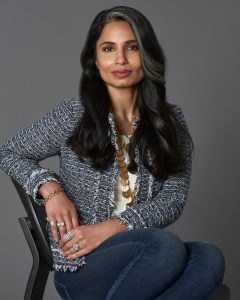
COO Asya Bradley
“After viewing yet another tragedy engulf the Black community, and the all-too-familiar protests against persisting issues,” Hawkins said. “it was beyond clear to me that the solutions Black America needs must be financially-focused and developed within our community.”
The pair both had fintech experience. Hawkins had founded Griffin Technologies, a company focused on providing real-time, contextual intelligence to community banks and credit unions. And Bradley most recently was a founding team member and head of revenue at Synapse, a platform that built banking-as-a-service APIs to help bank the unbanked of America by connecting fintech platforms to banking institutions.
They discovered that there were only about 19 Black banks in the U.S., collectively holding about $5 billion in assets.
“And their technology was really behind the times,” Hawkins said. “We also took a hard look at some of the existing digital banks to really see who was really going about it in the same way that we felt like America needed, and it was pretty clear at that point, that no one was really attacking the issue of helping Black America build some level of financial stability through the form of wealth-building play.”
The pair formed First Boulevard last August under the premise that Black Americans are “massively underserved consumers” of financial products and services despite having a collective spending power of $1.4 trillion annually. The startup’s mission is to empower Black Americans “ to take control of their finances, build wealth and reinvest in the Black economy” via a digitally-native platform.
Part of its goal with the new capital involves building out a Black business marketplace, which will give its members Cash Back for Buying Black . It also plans to use the money to expand its team, increase its customer base and grow its platform to offer fee-free debit cards, financial education and on developing technology to help members automate their saving and wealth building goals.
“History has proven that oppressed communities can succeed when their finances are centralized, and when it comes to financial services for the Black community, a centralizing force is long overdue,” Hawkins said.
The bank’s Cash Back for Buying Black program helps members earn up to 15% cashback when they spend money at black-owned businesses.
“I believe the most recent stat but that also was that 41% of black owned businesses have closed since COVID-19 started,” Hawkins said. “We want to support them as much as we can.”
First Boulevard also is focused on passively building wealth for its communities.
“Black America as a whole has been blocked from learning how money works. We want to connect our members to wealth-building assets such as micro investments like money market accounts, high yield savings and cryptocurrency — things that Black America has largely been blocked from,” Hawkins said.
Bradley, who serves as First Boulevard’s COO, believes the current financial industry was not built to serve the needs of melanated people. Its goal is to take their understanding of the unique needs of the Black community to provide things such as early access to wages, round up savings features, targeted financial education and budgeting tools.
The pair aims to have a “fully inclusive” team that represents the community it’s trying to serve. Currently, its 20-person staff is 60% black, and 85% BIPOC. Two-thirds of its leadership team are women and 100% is BIPOC.
“We are very proud of that considering that in the fintech space, those are not normal numbers from a leadership perspective,” Bradley said.
For Katie Palencsar, an investor at the Female Innovators Lab by Barclays and Anthemis, said that her firm has always recognized “that access to financial services has long remained a challenge despite the digital evolution.”
“This is especially true for Black Americans who often reside in financial deserts and struggle to find platforms that truly look to serve them,” she said. “First Boulevard deeply understands the challenge.”
Palencsar believes that First Boulevard’s mission of helping Black Americans not just bank, but actually build wealth, is unique in the market.
“First Boulevard sees the wealth gap that continues to grow within the U.S. and wants to build a digital banking platform that addresses the systemic and structural challenges that face this population while enabling Black Americans and allies to invest in the community,” she said.
The company also recently announced a partnership with Visa, under which First Boulevard will be first to pilot Visa’s new suite of crypto APIs. First Boulevard will also launch a First Boulevard Visa Debit card.
First Boulevard is one of several digital banks geared toward Black Americans that have emerged in recent months. Paybby, a digital bank for the black and brown communities, recently acquired Wicket, a neobank that uses AI and biometric technology to create a personalized experience for users. Hassan Miah, the CEO and founder of Paybby, said the bank’s goal is to be “the leading smart, digital bank for the Black and Brown communities.”
Paybby, which started by offering a bank account and a way to expedite PPP loans, will soon be adding a cryptocurrency savings account for the Black and Brown communities.
“Black buying power is projected to grow to $1.8 trillion by 2024,” Miah said. “Brown buying power is over $2 trillion. Paybby wants to take a good portion of this multi-trillion dollar market and give it back to these communities.”
Last October, Greenwood raised $3 million in seed funding from private investors to build what it describes as “the first digital banking platform for Black and Latinx people and business owners.”
At the time, co-founder Ryan Glover, founder of Bounce TV network, said it was “no secret that traditional banks have failed the Black and Latinx community.”

from Startups – TechCrunch https://ift.tt/3aWhkl4
Comments
Post a Comment