
June makes product analytics more accessible

Meet June, a new startup that wants to make it easier to create analytics dashboards and generate reports even if you’re not a product analytics expert. June is built on top of your Segment data. Like many no-code startups, it uses templates and a graphical interface so that non-technical profiles can start using it.

“What we do today is instant analytics and that’s why we’re building it on top of Segment,” co-founder and CEO Enzo Avigo told me. “It lets you access data much more quickly.”

Segment acts as the data collection and data repository for your analytics. After that, you can start playing with your data in June. Eventually, June plans to diversify its data sources.

“Our long-term vision is to become the Airtable of analytics,” Avigo said.

If you’re familiar with Airtable, June may look familiar. The company has built a template library to help you get started. For instance, June helps you track user retention, active users, your acquisition funnel, engagement, feature usage, etc.
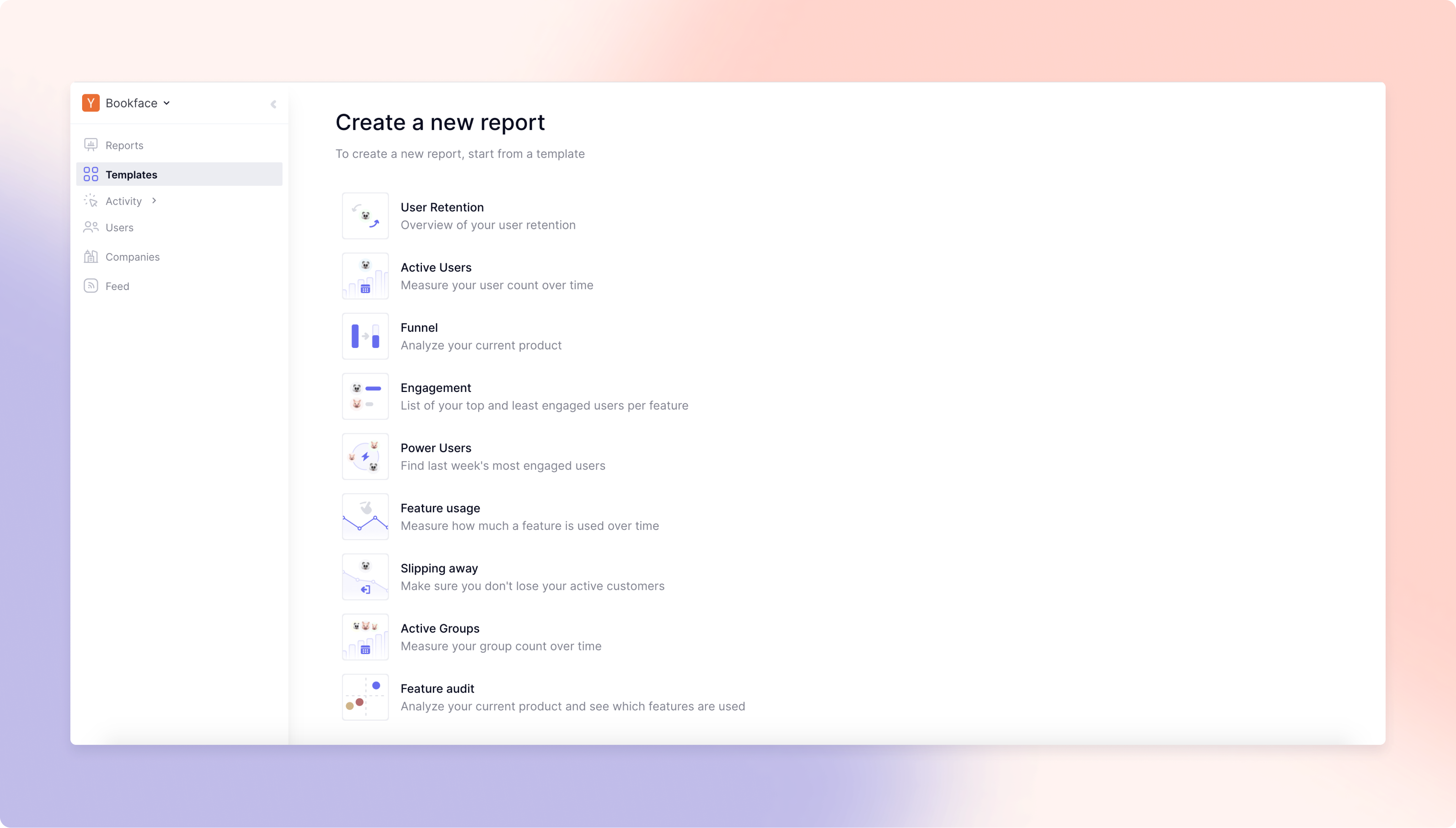
Image Credits: June

Once you pick a template, you can start building a report by matching data sources with templates. June automatically generates charts, sorts your user base into cohorts and shows you important metrics. You can create goals so that you receive alerts in Slack whenever something good or bad is happening.

Advanced users can also use June so that everyone in the team is using the same tool. They can create custom SQL queries and build a template based on those queries.

The company raised a seed round of $1.85 million led by Point Nine. Y Combinator, Speedinvest, Kima Ventures, eFounders and Base Case also participated, as well as several business angels.

Prior to June, the startup’s two co-founders worked for Intercom. They noticed that the analytics tool was too hard to use for many people. They didn’t rely on analytics to make educated decisions.

There are hundreds of companies using June every week and that number is growing by 10% per week. Right now, the product is free but the company plans to charge based on usage.
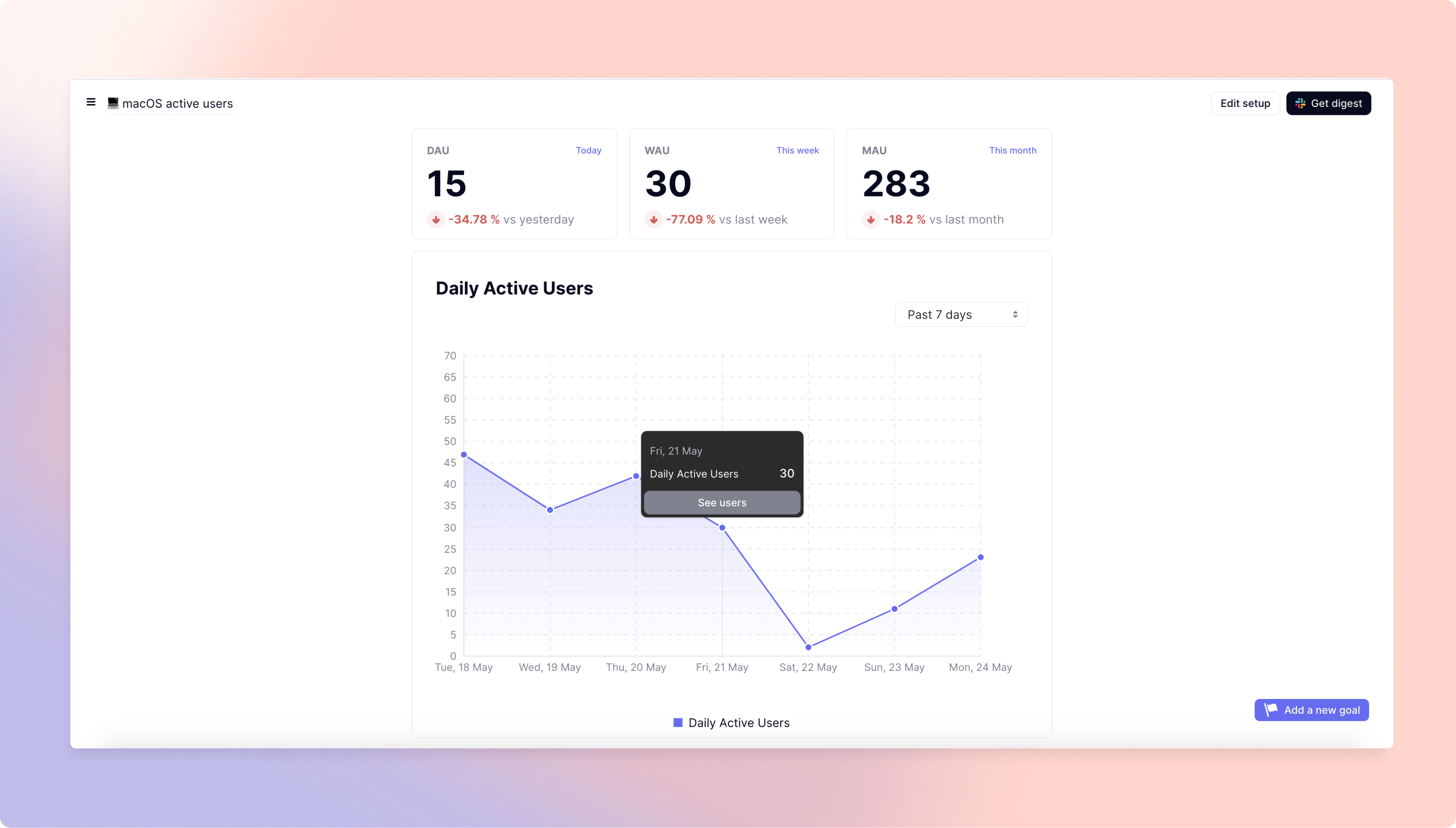
Image Credits: June


from Startups – TechCrunch https://ift.tt/3vCj6Qx

Comments

Popular posts from this blog

Axeleo Capital raises $51 million fund

Axeleo Capital has raised a $51 million fund (€45 million). Axeleo first started with an accelerator focused on enterprise startups. The firm is now all grown up with an acceleration program and a full-fledged VC fund. The accelerator is now called Axeleo Scale , while the fund is called Axeleo Capital . And it’s important to mention both parts of the business as they work hand in hand. Axeleo picks up around 10 startups per year and help them reach the Series A stage. If they’re doing well over the 12 to 18 months of the program, Axeleo funds those startups using its VC fund. Limited partners behind the company’s first fund include Bpifrance through the French Tech Accélération program, the Auvergne-Rhône-Alpes region, Vinci Energies, Crédit Agricole, BNP Paribas, Caisse d’Épargne Rhône-Alpes as well as various business angels and family offices. The firm is also partnering with Hi Inov, the holding company of the Dentressangle family. Axeleo will take care of the early stage in...

TikTok’s rivals in India struggle to cash in on its ban

For years, India has served as the largest open battleground for Silicon Valley and Chinese firms searching for their next billion users. With more than 400 million WhatsApp users , India is already the largest market for the Facebook-owned service. The social juggernaut’s big blue app also reaches more than 300 million users in the country. Google is estimated to reach just as many users in India, with YouTube closely rivaling WhatsApp for the most popular smartphone app in the country. Several major giants from China, like Alibaba and Tencent (which a decade ago shut doors for most foreign firms), also count India as their largest overseas market. At its peak, Alibaba’s UC Web gave Google’s Chrome a run for its money. And then there is TikTok, which also identified India as its biggest market outside of China . Though the aggressive arrival of foreign firms in India helped accelerate the growth of the local ecosystem, their capital and expertise also created a level of competit...