Critical cyber attacks on both businesses and individuals have been grabbing headlines at an alarming rate. Cybersecurity has moved from a background risk for enterprises to a critical day-to-day threat to business operations, forcing executive teams to pour time and hundreds of billions in capital into monitoring and prevention efforts.
Yet even as investment in security ticks up, the frequency and cost of cybercrime to businesses continues to rapidly accelerate, with the World Economic Forum estimating the economic loss due to cybercrime could reach $3 trillion by 2020.
More companies are now turning to cyber insurance as a means of mitigating financial exposure. However, for traditional insurers, cybersecurity remains a relatively nascent and unfamiliar issue, requiring risk-assessment data points and methodologies largely different from those seen in traditional insurance products. As a result, businesses often struggle to get the scale of cybersecurity coverage they require.
Arceo.ai is hoping to expand the size and scope of the cyber insurance market for both insurers and companies, by providing insurers with effective real-time data, analytics and context, necessary for safely and efficiently underwrite cyber risk.
This morning, Arceo took a major step in achieving that goal, announcing the company has raised a $37 million round of funding led by Lightspeed Venture Partners and Founders Fund with participation from CRV and UL Ventures.
Using an expansive set of global sources across a customer’s digital footprint, Arceo.AI collects internal, external and macro cyber risk data which it uses to evaluate a company’s security and cyber risk management behavior. By automating the data collection process and connecting it with insurer underwriting processes, Arceo is able to keep its data and policy assessments up to date in real-time and enable faster, more efficient quotes.
A vital component of Arceo’s platform is its analytics offering. Using patented data science and cyber risk models, Arceo generates analytics-driven insights for insurance carriers, brokers and end-insured customers. For end-insured customers, Arceo helps companies understand whether they’re using the best mitigation strategies by providing policy recommendations and industry benchmarking to help contextualize day-to-day cyber behavior and hygiene. For underwriters, Arceo can provide specific insurance recommendations based on particular policy coverages.
Ultimately, Arceo looks to provide both insurers and the insured with actionable answers to key questions such as how one assesses cyber risk, how one determines what risks can be mitigated with technology alone, how one knows which systems are best and whether those systems are being used appropriately.
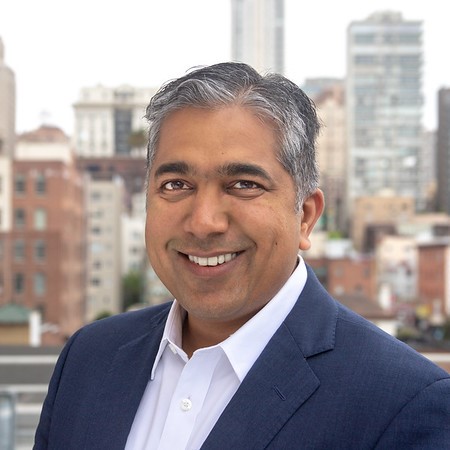
Arceo.ai Chairman Raj Shah. Image via Arceo.ai
In an interview with TechCrunch, Arceo Chairman Raj Shah explained that the company’s background expertise, proprietary data systems, and deep pedigree in both the security and insurance truly differentiate Arceo from competing solutions. For starters, both Shah and Arceo co-founder and CEO Vishaal Hariprasad have spent close to the entirety of their careers in national security and cybersecurity. Hariprasad started his career in the Airforce’s first cohort of cyber warfare officers, before teaming up with Shah to start Morta Security in 2012, a security startup the two sold to Palo Alto networks in just roughly two years.
After selling the company, Shah and Hariprasad remained in the security world before realizing that there was a natural intersection between security and insurance, and a real opportunity for risk transfer solutions.
“Having studied the market, we saw that people are spending more and more dollars on cybersecurity products… There are hundreds of thousands of new vendors every year… Spend is going up, but we don’t feel any safer!” Shah told TechCrunch.
“That’s when we said ‘Hey, we need to move beyond just thinking about technology points and products, and think about holistic cyber risk management.’ And this is where insurance has historically done a great job. Putting a price on behavior and making people think and letting them take risks… From life and death and health to buyers and property and casualty. And so cyber is that next class risk… So that’s really why we started the business. We wanted to provide a real way to manage the cyber stress that they’re facing and that will impact every single one of our digital lives.”
Since the company’s founding, Raj and Vishaal have been joined by a deep network of cyber and insurance experts. Today, Arceo also announced that Hemant Shah, founder and former CEO of catastrophe risk modeling company RMS has joined Arceo’s Board of Directors. Additionally, earlier this month, the company announced that Mario Vitale, the former CEO of publically-traded insurance companies Willis Towers Watson and Zurich Insurance Group, would be joining the Arceo team as the company’s President.
The company noted that participation from high-profile industry vets like Hemant and Mario not only further advance Arceo’s competitive advantage but also acts as another major validation of the company’s future and work to date.
According to Arceo Chairman Raj Shah, after years of investing in R&D, the latest funds will be used towards expansion efforts and scaling Arceo to the broader ecosystem of insurance and brokers. Longer-term, the company hopes to offer the most complete combined cybersecurity and risk transfer solution to insurers and the insured, easing the stress around cyber threats for both enterprises and individuals and ultimately improving broader cyber resiliency.
If you’d like to hear more from Arceo’s Raj Shah, Raj will also be joining us this year on the Extra Crunch stage at TechCrunch Disrupt SF, where he’ll discuss how founders and companies should think about potential US government investment. Grab tickets here and we hope to see you there!

from Startups – TechCrunch https://ift.tt/2lHgcLl
Comments
Post a Comment